Episode 20 - Second in Line
Situational Awareness in the Woods

--From the “Second Tour at DNR, 1982-1997”
Gary had finished turning angles and was taking down the “gun,” which in surveyors’ parlance is what we call the theodolite. We had not yet progressed to electronic data collection, so I was recording data in a yellow “Rite-in-the-Rain” field book. As Gary nestled the gun into the snug confines of its case, I tore down his tripod, hoisted it on my shoulder and headed to the point ahead, with Gary following.
It was a fine October afternoon. We moved along our brushed-out line through the second-growth stand toward the point ahead. The ground was uneven, as it usually is in the woods but, as it was a Wednesday, we had did not suffer from what George called ‘the Monday morning stumbles,’ a malady that seemed to affect each of us every Monday morning until we had regained our “sea legs,” which we’d lost over the weekend.
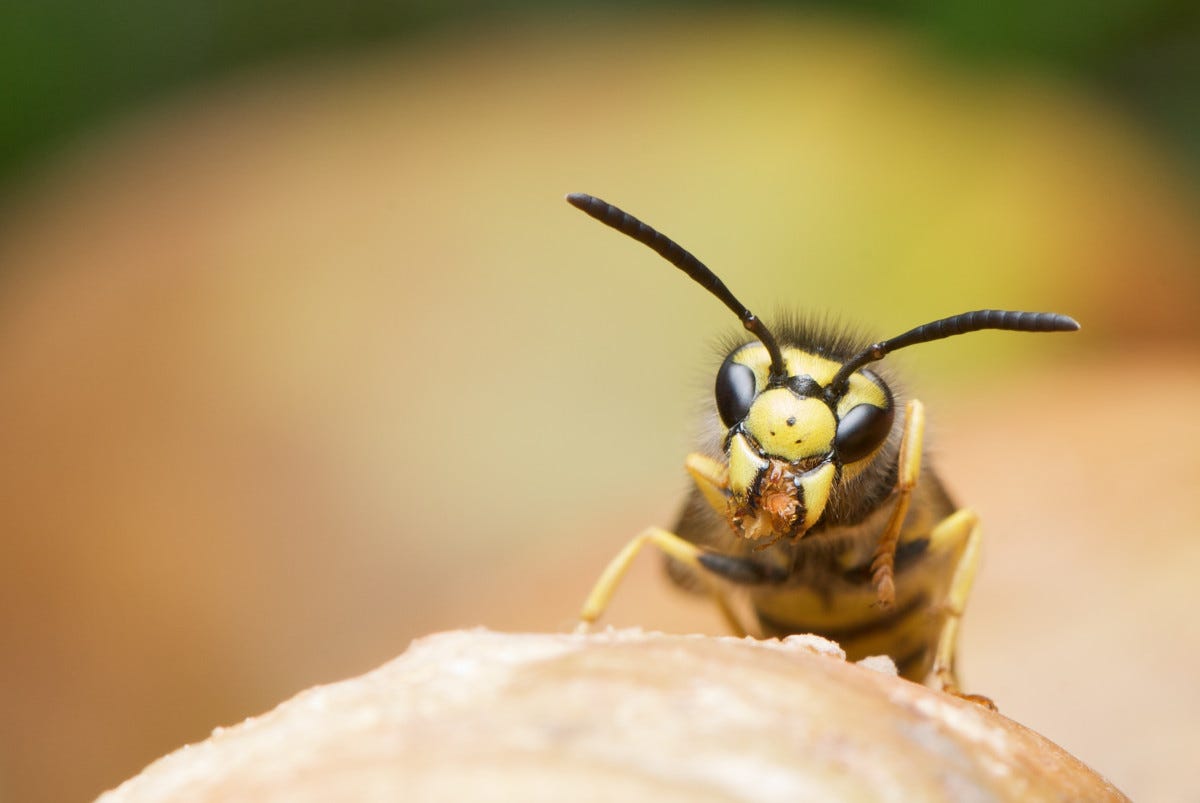
I arrived at the next point and began setting up the tripod. Meanwhile, Gary had arrived, but all of a sudden he stripped off the theodolite and its backpack and proceeded to dance a demented jig, arms and legs flailing about, limbs all akimbo. He beat at his legs and finally unzipped his fly, from which issued several yellowjackets! Thankfully, he did not get stung. Wow! What a narrow escape! They had flown into and crawled straight up his pants leg as he passed over a nest I had inadvertently disturbed.
Yellow jackets often build nests in the ground, and they get real cranky every October. They take extreme exception when an ill-placed footfall lands squarely on their nest. The best defense against them is to maintain constant situational awareness, wherein the surveyor’s senses are finely attuned to any unusual buzzing sounds. When navigating single-file through the woods it is best to be first, or last in line and maintain a goodly following distance—kind of like the ‘3-Second Rule’ of traffic safety. The first guy unknowingly stirs them up and passes them by, and the last guy receives sufficient warning of the hazard, giving him time to take evasive action. But often, No.2 arrives just in time to absorb the brunt of their attack. Never be Second in Line.